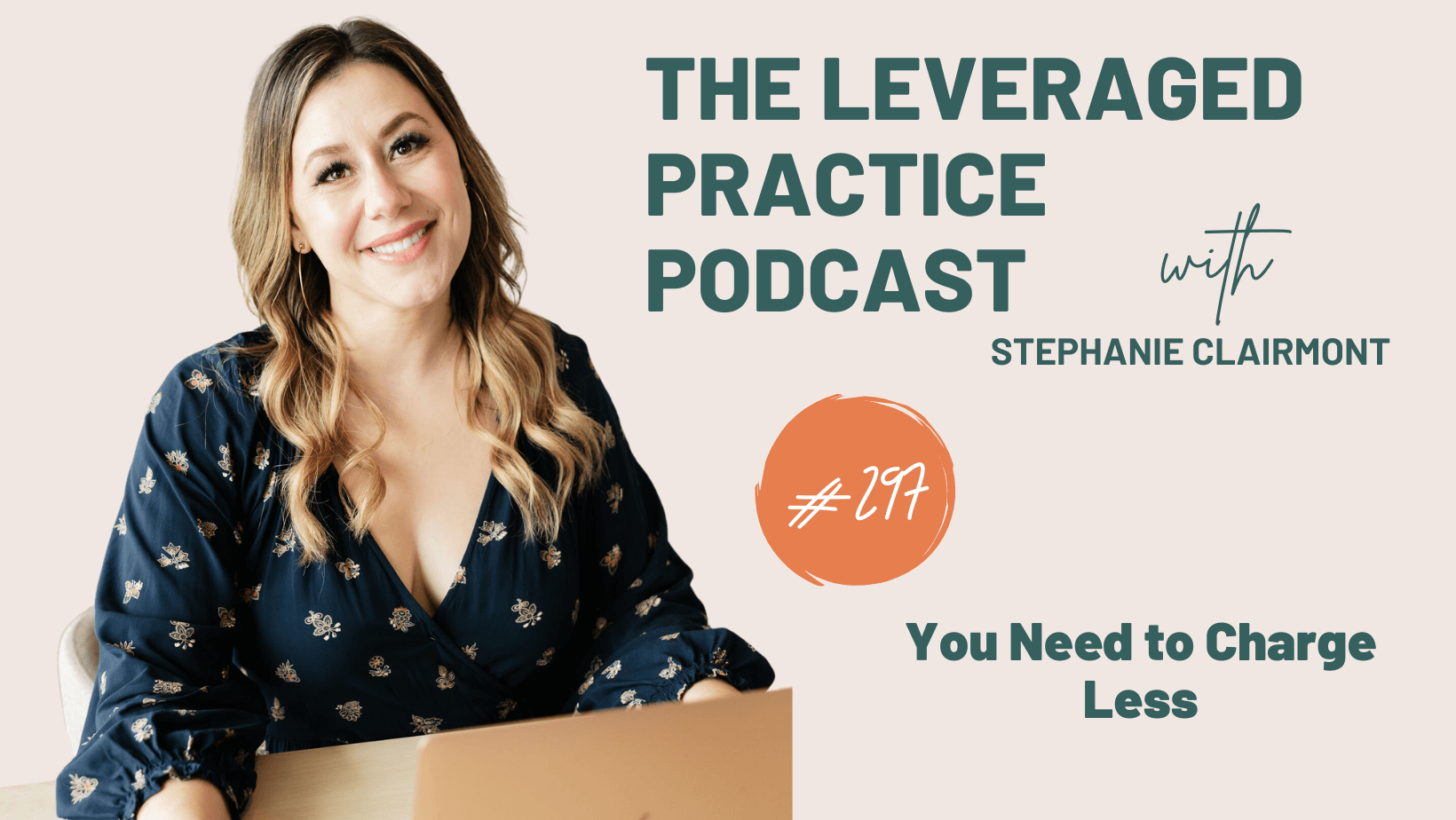
Ep. 297 You Need to Charge Less
Listen on your favourite podcast app like Apple Podcasts or Spotify.
The online education world has changed dramatically in the past decade. If you are a health professional or private practice owner exploring how to diversify income with digital programs, you have probably seen plenty of messages about charging more, going “premium,” and selling high ticket offers.
But here is the truth. Charging less, when done strategically, may actually help you grow your practice faster, serve more people, and create a more sustainable revenue stream.
In this article, you will learn how pricing in the online education space has shifted over the years, why today’s market demands a different approach than the 2020–2022 “high ticket era,” smart price points for group programs, hybrid models, and self study courses, plus a simple revenue model that shows how a $1,000 program can outperform a $3,000 one. You will also see practical steps to restructure your offers so they attract more clients without overworking you.
The Evolution of Online Program Pricing
When online health programs first started gaining traction around 2013, price points were modest. Many professionals successfully sold group programs for $150 to $200 that included a few modules and live Q&A calls. Demand was high, competition was low, and clients were excited about learning online.
Then came 2020. With lockdowns pushing everyone online, demand exploded. Suddenly it was common to see programs priced at $5,000, $10,000, or even more. Many clients were willing to pay because they had few alternatives.
That moment in time has passed. Clients today are more discerning. They have likely tried online courses before, and some walked away feeling disappointed. They now look for personalization, value, and realistic price points, not just a hefty price tag.
Why “Charge More” Isn’t Always the Best Advice
You may have colleagues selling $2,500 to $5,000 programs and wonder if you should price at the same level. While it is possible to sell at those prices, here is the catch.
High-ticket requires high-touch. To sell a $3,000 health program, you need more than a landing page. You will likely need sales calls, personal outreach, and a strong brand presence.
High ticket requires proof. Clients investing thousands expect proven results, testimonials, and a level of customization that takes significant time.
High ticket narrows your audience. Fewer people can afford those programs, limiting your reach and revenue potential.
If you are early in building your online presence, or simply do not want to spend your days on sales calls, there is a better way.
The Sweet Spot: Hybrid Programs Around $1,000
One of the most effective models for health professionals right now is a hybrid group program priced around $899 to $1,200.
Hybrid means your program includes group sessions such as weekly Q&A or coaching calls, educational resources like videos, guides, or templates, and community support through a private group or forum.
This format allows clients to get both structure and personalization without you needing to deliver endless one on one sessions.
The Revenue Math
Here is a simple example:
Price: $1,000 per client for 12 weeks
Enrollment: 60 clients
Delivery: Two group calls per week, about two hours total
Revenue equals $60,000 per cohort, or about $20,000 each month.
That is the power of charging less per client while helping more people at once. It is easier to sell a $1,000 program than a $3,000 program, and the group format keeps your delivery time efficient.
Where Self Study Fits In
Not every offer needs to be a hybrid program. Self study courses and digital resources still have a place, but they need to be priced appropriately.
In today’s market, self study programs are most successful when priced between $100 and $300. Anything higher, without coaching or community, tends to feel overpriced to buyers.
For you, this is an easy way to add a low touch revenue stream that clients can purchase at any time. Think of these as the entry point into your world, a stepping stone toward higher value programs.
Keep Premium Pricing for One to One Services
Charging less does not mean undervaluing your one on one time.
Personal access to you, whether through direct coaching, detailed feedback, or hands on support, should remain premium. In fact, many private practice owners are raising their one on one rates because the value of personalized access has never been higher.
The key is to differentiate your offers. Self study becomes an affordable entry point. Hybrid group is your scalable mid tier program, priced around $1,000. One to one services stay premium and are priced according to your expertise and time.
Building a Product Suite That Works
Instead of relying on one program, think of your business as offering a portfolio of services that meet clients at different stages and price points.
Here is what that might look like:
- Low ticket entry under $50, such as a mini course, guide, or resource that introduces clients to your expertise.
- Self study at $100 to $300, a complete program that provides value without direct access to you.
- Hybrid group at $899 to $1,200, a scalable high value program that balances support with efficiency.
- Premium one on one services, priced higher for direct coaching or consulting.
When structured well, these offers lead into each other, giving clients options while creating a steady flow of revenue for you.
Why This Matters for Health Professionals
If you are a clinician, therapist, dietitian, or other health professional, your time is limited. You can only see so many clients per week before hitting a ceiling.
By adding strategically priced online offers, you increase accessibility, scale your impact, protect your energy, and build sustainable revenue streams. You help more people without burning out.
Key Takeaways
The era of clients paying anything for anything online is over. Today’s buyers value customization, access, and fair pricing.
You do not need to charge $3,000 to earn $20,000 per month. A $1,000 hybrid group program can get you there with less resistance.
Self study courses work best when priced closer to $100 to $300.
Keep one on one work premium. Your time and expertise are worth it.
The smartest strategy is to build a product suite that offers multiple pathways for clients to work with you.
Next Steps
Want help creating your own product suite?
Grab the FREE eBook: 27 Scalable Offers for Health Professionals here
Or contact us to learn more about working with us.
Final Thought
Charging less does not mean undervaluing your work. It means pricing smartly, choosing the right delivery models, and creating offers that meet today’s clients where they are. With the right structure, you can serve more people, scale your income, and finally create the balance you have been looking for in your practice.
If you enjoyed this episode, you might also enjoy:
- Ep. 294 Do This Before You Run Ads
- Ep. 295 The Difference Between Free and Paid Content
- Ep. 296 Here’s How to Know if You’re Teaching Too Much for Free