Ep. 298 The Ordinary Business with Jess Freeman
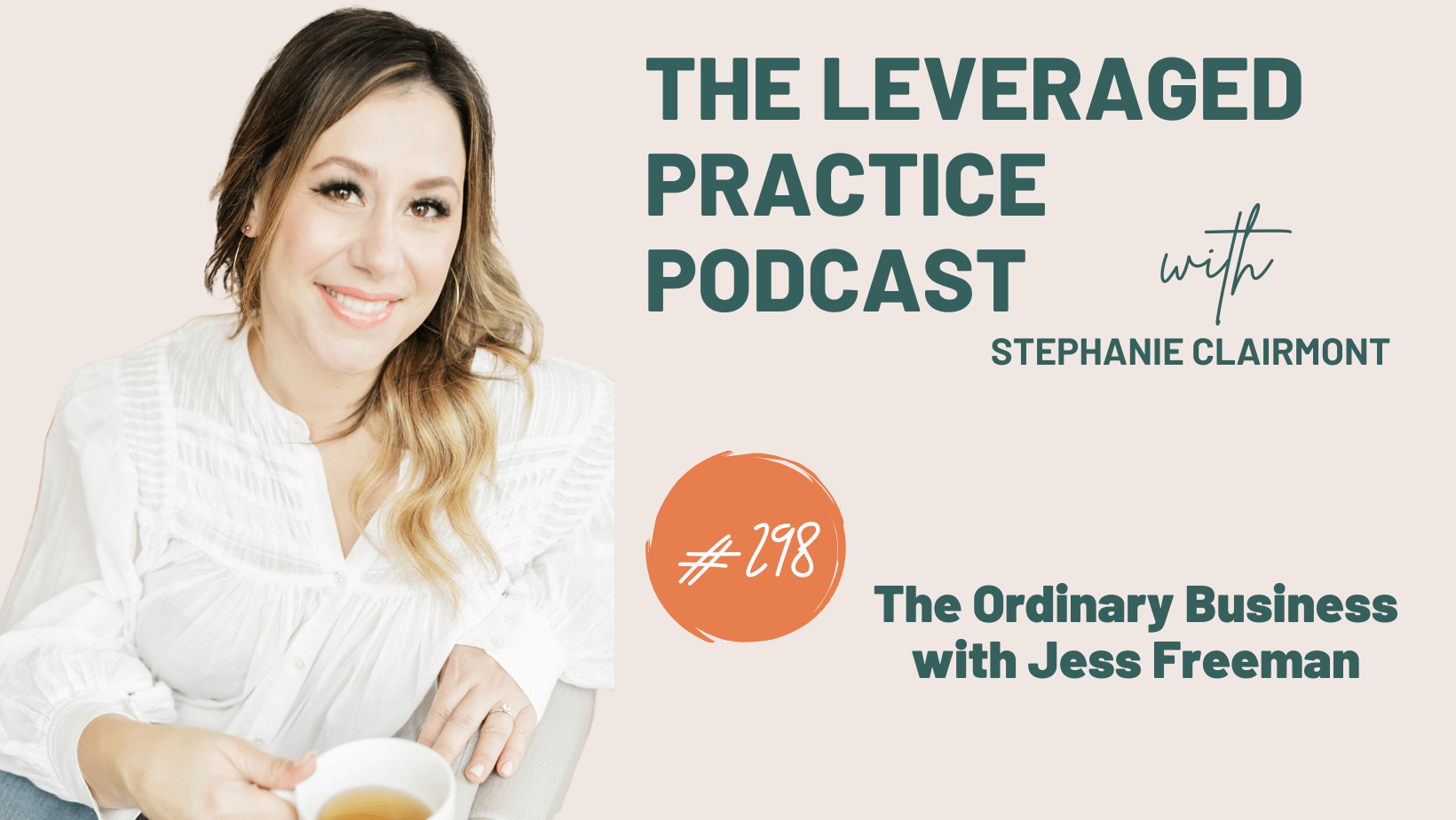
Listen on your favourite podcast app like Apple Podcasts or Spotify.
If you are a clinician or health professional trying to grow your practice online, this will resonate.
On one side is the loud world of “seven figures in seven months,” full of ads, big launches, and promises of quick success. On the other side is real life clients to serve, a family to care for, and the desire to build a business that feels sustainable, profitable, and aligned.
In this article, drawn from a conversation between Stephanie Clairmont and Jess Freeman (web designer, SEO strategist, and founder of The Ordinary Business), we explore what it means to build a grounded, healthy, and successful online business.
Why “Ordinary” Businesses Matter for Health Professionals
Jess has been in business for 14 years, primarily as a solo operator. She focuses on web design and SEO for health and fitness entrepreneurs. Her message is clear: ordinary, profitable, low-overhead businesses deserve more celebration than vanity metrics.
“I do good work, I’m nice to my clients, and I help others.”
For health professionals, this message resonates. You do not need a massive team or complicated systems to be successful. What you need is clarity, consistent marketing, and a model that fits your life.
Steph adds that while fast growth can look exciting, it often comes with higher ad costs, bigger payrolls, and heavier stress. Bigger revenue does not always mean more profit or more peace. Sometimes, leaner truly is healthier.
What Changed Since 2020 and What’s Shifting Now
The online business world has moved through waves of change over the past few years.
- The pandemic boom: 2020 brought an explosion of online offers and virtual programs.
- The post-pandemic dip: 2022 and 2023 saw tightening economies and more cautious buyers.
- The current shift: Buyers now want specific solutions and authentic people behind the brands they buy from.
What This Means for Your Practice
- Specific beats general. Narrow your focus to solve one clear problem. Broad programs no longer convert as well.
- People over polish. Audiences care more about your authenticity than your perfect Instagram feed.
- Trust takes longer. It may now take 15 to 25 touchpoints before someone decides to buy, especially in health and wellness where trust is critical.
The Seven-Figure Myth and the Real Math Behind It
Somewhere along the way, “seven figures” became the ultimate goal. Many people start businesses expecting to reach a million in revenue quickly. What they often don’t see is the cost behind the scenes.
High ad spend, large teams, and expensive tech stacks can eat most of the profit. Steph shared how her business once grew to over half a million in annual revenue but also carried the burden of payroll, ad expenses, and constant launches.
For health professionals, this is an important reminder:
- Focus on profit, not just top-line numbers.
- Choose growth that feels sustainable and aligns with your values.
- Remember that scaling is optional. Success can mean stability and satisfaction, not just size.
Building for Sustainability, Capacity, and Margin
Jess has always resisted the pressure to build an agency. She enjoys designing and keeps her business lean. Her goals center on capacity, margin, and lifestyle.
Steph echoes this shift. After years of managing a large team, she is rebuilding a smaller, more efficient business that still delivers impact.
When thinking about sustainability, ask yourself:
- How many client hours do I want each week?
- What kind of support helps me thrive without adding management stress?
- Which offers provide strong results for clients while keeping my energy in balance?
Go Deeper, Not Broader: Micro-Niche Wins
In the health field, broad labels like “IBS dietitian” used to work. Now, specificity sells. The clearer your problem and audience, the easier it is for clients to recognize that your offer is for them.
Instead of “gut health program,” consider something like “IBS support for high-energy, Type A women in their 30s who want lasting relief.”
You don’t need to invent a new framework. Just sharpen your message so people instantly see themselves in it.
Building Trust Without Over-Promising
Over the last five years, the market has become skeptical. Buyers want to know who you are and how you teach before they invest.
That’s why long-form and short-form content both matter. Podcasts, YouTube videos, blogs, and Instagram reels let people experience your teaching style and values.
Free classes, or webinars, also continue to work. They allow you to educate and connect before making an offer. The key is to give people a real win while staying aligned with your ethics and boundaries.
“You don’t have to do over-promising marketing. Give enough to be helpful and build trust.”
Design a Sales Process That Fits You
Not everyone loves discovery calls. If long sales calls exhaust you, there are other ways to sell effectively. Transparency and personalization can make the process smoother for both sides.
Here are options that work:
- Post your prices openly so people can self-select.
- Use short applications to qualify leads.
- Offer asynchronous Q&A through email or chat instead of scheduled calls.
- Host free classes that naturally lead to your paid offer.
Every strategy can work. The key is that it feels good for you and sustainable for your lifestyle.
Use Low-Ticket Offers as a Test Drive
Low-ticket offers, typically under $50, give people a way to experience your teaching style before they commit to a larger program.
These products also help you test your messaging and see what resonates. They are not new, but they continue to work because they lower the barrier to entry for new clients.
Everything Works When It Fits Your Business
Webinars, lead magnets, low-ticket offers, listed prices, hidden prices—almost every tactic can work when it matches your audience and business model.
Steph and Jess have both seen strategies fail when copied blindly and succeed when customized. Choose one approach and optimize it before chasing the next trend.
The Ordinary Business Movement
In June, Jess made a lighthearted post on Threads about an “Ordinary Conference.” She joked that speakers would need to make under $300K, have fewer than 5,000 followers, and bring snacks.
The post went viral because it hit a nerve. People are hungry for real stories about profit, capacity, and balance. That one post grew into The Ordinary Business, a community and virtual summit that celebrates grounded, profitable businesses.
Many health entrepreneurs fit this mold. You might not have massive follower counts or a big team, but you deliver results, support clients deeply, and run a healthy business. That deserves recognition.
Six SEO-Friendly Takeaways for Health Professionals
1. Focus on One Clear Problem
Simplify your offer until the result is obvious. Specific, outcome-driven offers convert best.
2. Build a Trust Path with Content
Use podcasts, blogs, and short videos so people can experience your voice and values.
3. Teach with Free Classes
A free class or webinar helps people see your expertise and understand your method.
4. Match Your Sales Process to Your Energy
Whether you prefer calls, applications, or transparent pricing, do what feels right and sustainable.
5. Track Profit, Not Just Revenue
Measure your personal income and hours worked, not just your sales numbers.
6. Use Low-Ticket Offers and Lead Magnets
Provide small, helpful first steps that build trust and connect directly to your paid programs.
Actions You Can Take This Week
- Tighten one offer page so the problem and promise are unmistakable.
- Outline a free class that teaches one useful step and naturally leads into your program.
- Map your audience’s journey from finding you to buying. Identify and fill any gaps.
- Simplify your sales steps so they feel natural and authentic.
- Review your expenses and cut anything that does not improve results or efficiency.
Build a Business That Fits Your Life
Some of you will grow teams. Others will stay solo with light support. Some will aim for seven figures, while others will prioritize balance and fulfillment. All are valid.
The best business for you is one that is sustainable, profitable, and aligned with your values.
If this conversation resonates, visit The Ordinary Business to learn more about the summit and community. It is a space for real entrepreneurs building meaningful, successful, and sustainable businesses without the hype.
And as Steph says, “Ask yourself which part of the ordinary business you want more of right now profit, margin, time, or calm.”
About Jess Freeman
Jess Freeman is a web designer and SEO strategist who helps health and fitness entrepreneurs improve their online visibility and attract clients through strong design and smart strategy. She has been running her business for more than 14 years, serving hundreds of experts and small business owners with websites that not only look good but also perform well.
Jess is also the founder of The Ordinary Business, a growing community and virtual summit that celebrates sustainable entrepreneurship, profitability, and balance. Her message is simple but powerful: you can build a thriving, long-lasting business without chasing vanity metrics or burning out.
You can learn more about Jess and The Ordinary Business at theordinarybusiness.com or follow her on Instagram at @jesscreatives and @theordinarybusiness.
If you enjoyed this episode, you might also enjoy:
- Ep. 295 The Difference Between Free and Paid Content
- Ep. 296 Here’s How to Know if You’re Teaching Too Much for Free
- Ep. 297 You Need to Charge Less